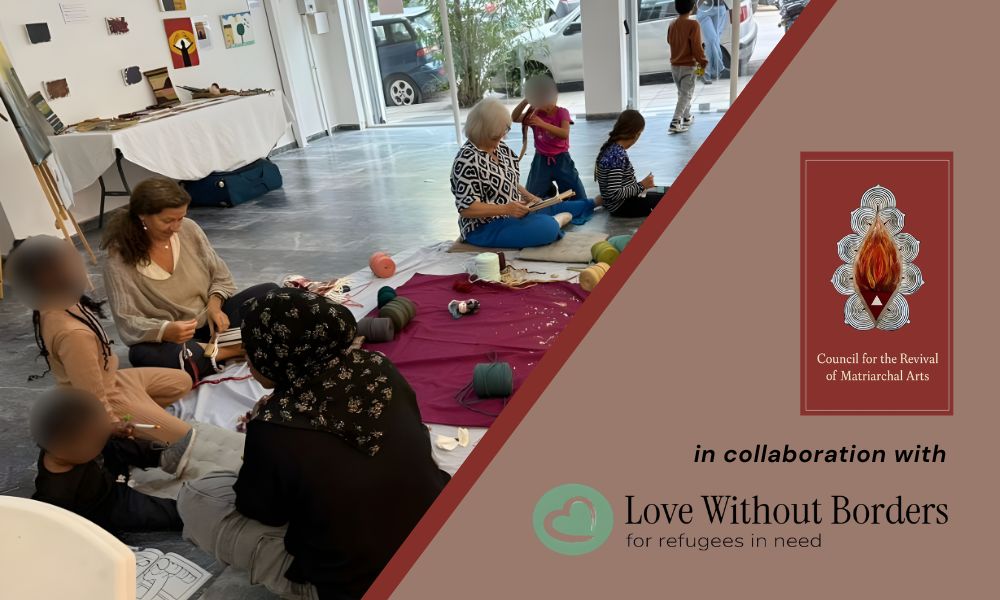
In October CRMA was delighted to have the opportunity to hold a weaving workshop and hearth gathering in Athens. We were invited by the fantastic small NGO, Love Without Borders for Refugees in Need (LWOB). Run by Kayra Martinez, a flight attendant with a huge heart, Love Without Borders helps refugees by selling their art, on their behalf, in Athens and in exhibitions organised through Kayra all over the world.
In 2015, Europe opened its borders to over a million refugees, and we were made aware of the awful suffering of those crossing the waters to Greece, and then travelling on beyond to northern European countries. However, especially in the last five years, mainstream news in most countries has reported from a very negative viewpoint, stressing the numbers of ‘illegal migrants’ rather than the refugees who are STILL coming from such war-torn countries as Sudan. This makes Love Without Borders’ work all the more important – many of the camps which were made to accommodate those originally aiming to travel to Northern countries in 2015 and 2016 are still there, still full and still harsh for those stuck in them.
LWOB has its base in Athens, with a large gallery dedicated to displaying the refugee paintings and hosting art workshops. We were able to use this space to offer some refugees and other community members a chance to relax, have some time away from the stress of their living situation, and to learn to weave, using small looms we had warped in readiness.
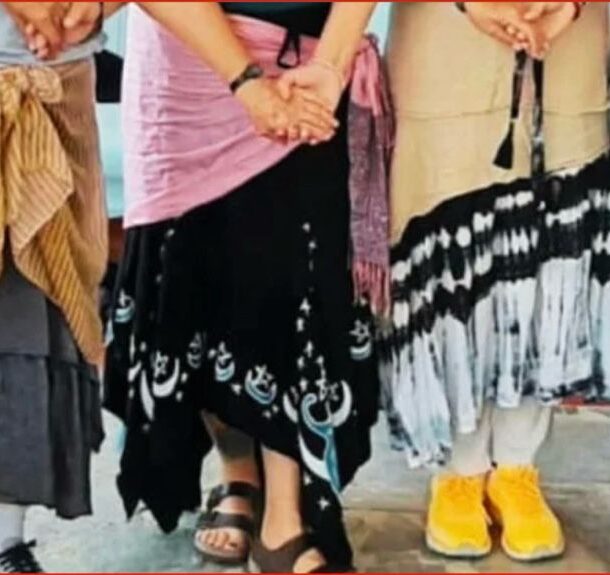
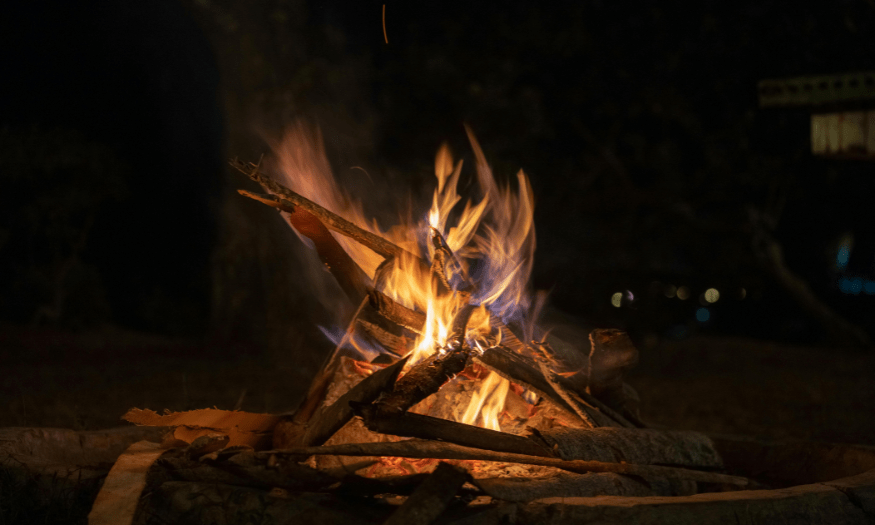
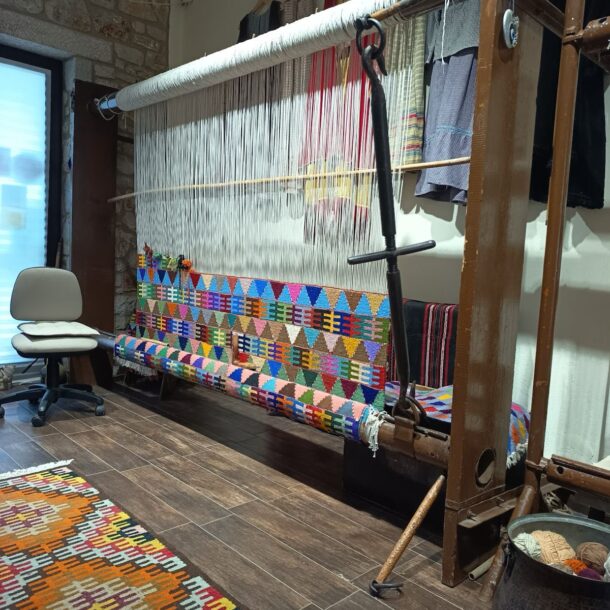
We made the space ours by displaying various tools of hand weaving; setting out a seating area with wools, cottons, beads and other decorating options arranged temptingly in the middle, representing our hearth. We sat around this circle, children and adults; some teaching, some learning, some just doing their own thing. Some English, some Greek, some gestures; language and cultural differences were overcome. We shared some home-cooked food, and it was touching and rewarding to see one woman was so immersed in her weaving she waved away her daughters’ offers to bring her food – until she had completed her creation.
An absorbed afternoon passed in the relaxed atmosphere of the space. We hope that as well as making a small tapestry, everyone who came felt the warmth of our hearth (hearts) and took some of that warmth back with them. Small tapestries were not the only things woven that day – new threads were woven into our own CRMA tapestry, connecting us with Love Without Borders, with Kayra and Ahmad, with women who came to try weaving.
This was our second workshop and involved bringing a suitcase of looms and materials with us from Crete. Those who came were not the only ones to learn from the experience – we understand we are learning about what we can present to children or people who want to learn about weaving, as well as what small projects we can propose which will hold their interest. We also need to think about how to encourage weaving at home, and that means providing small hand looms and materials for those who are really interested in carrying on.
As we learn more about weaving a matriarchal foundation for living, about weaving textiles, and passing on these skills, we will be aiming to hold more workshops primarily locally here in Crete. In the meantime, we continue to practice ourselves, and consider what we can offer to capture the imaginations of the women and girls who attend.
About the Author:
Sian has lived in Crete since 1985 and has three children two of whom are in Crete and one living in London. She feels lucky to have always been self employed and working with people, outdoors and close to nature. The Cretan traditions of sharing food and hospitality, offering without expecting anything back, have always aligned with her core beliefs. She learnt knitting, sewing and cooking from her maternal grandmother and has passed these skills and the joy of creation to her daughters. Excited to learn weaving she is looking forward to CRMA beginning lessons for local girls helping to keep the ancient traditions of weaving alive, and to making connections world wide with women weavers. She sees this as giving us opportunities to learn from other cultures, to share our knowledge, and to support younger women in learning the richness of their traditions.