A Conversation with Kirsten Mus and Jørgen About Memory, Objects and Care
In the first part of my conversation with Kirsten Mus, we explored her relationship with clay, the ancient forms that inspire her work, and the importance she places on creativity and care.
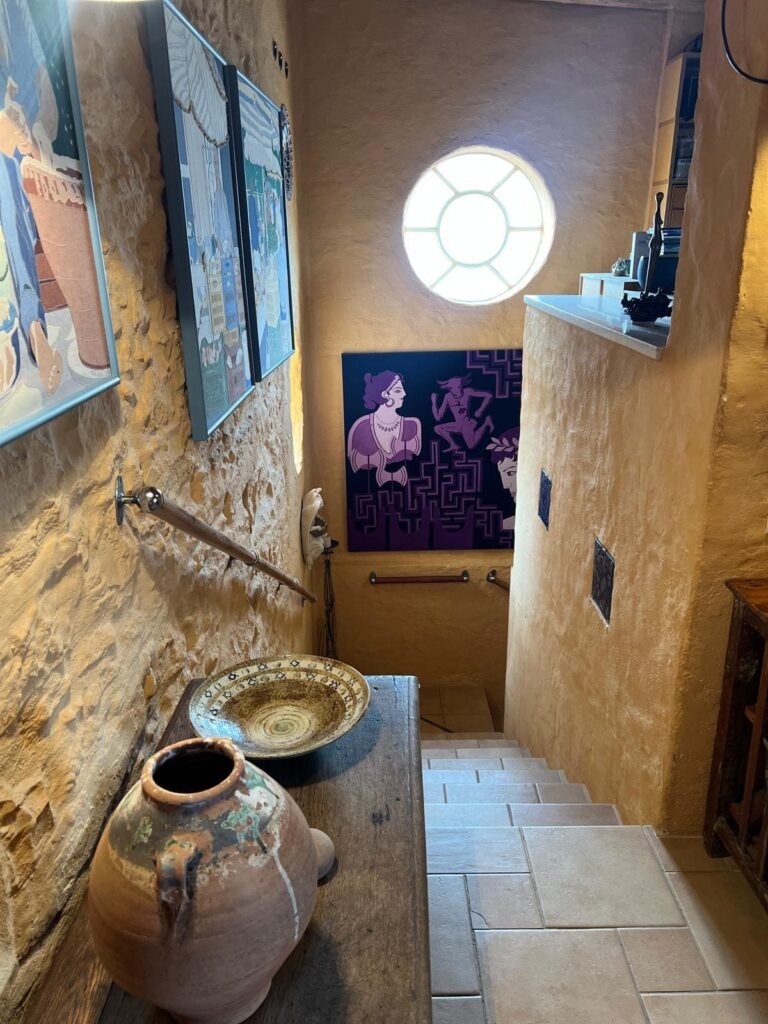
Her reflections also brought us to Huset i Fres, the home she and her husband Jørgen have created together.
I had visited them before the children’s clay workshop, and some of the stories of their home had stayed with me. One in particular was connected with stone from the church of Jørgen’s childhood in Denmark.
During the workshop, Jørgen took us around the house again. Later, when I returned to interview them, I asked whether creating a home filled with objects carrying so many different histories had always been part of their plan. His answer was: It had happened over time.
Read Part I: From Earth to Hands →
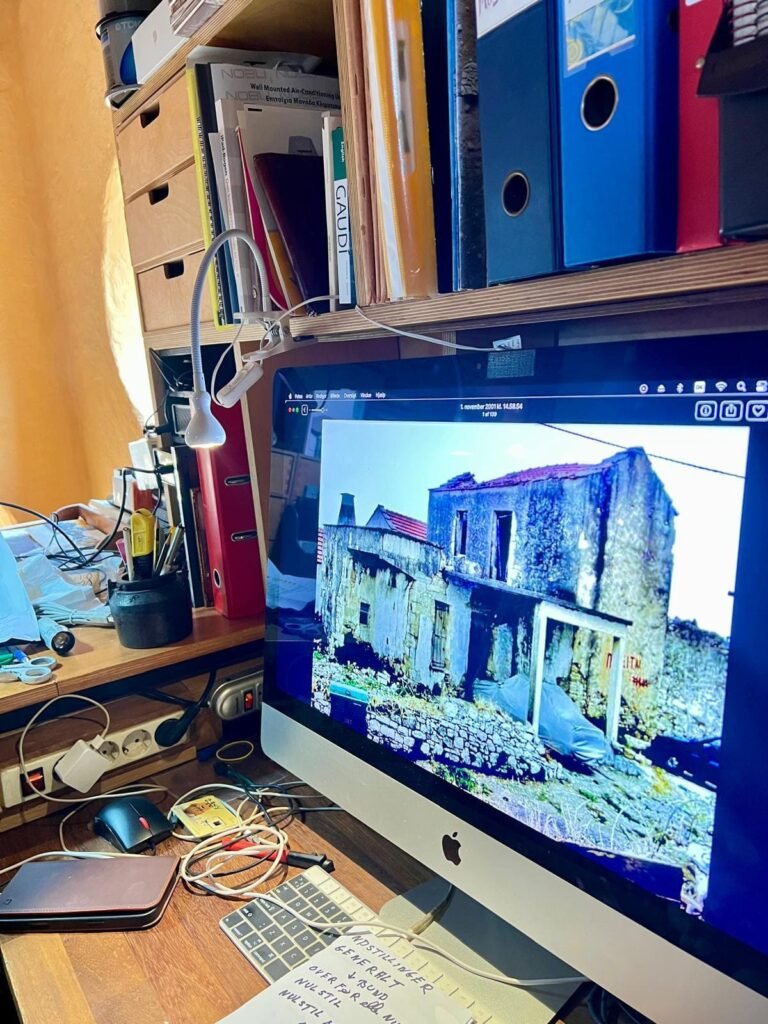
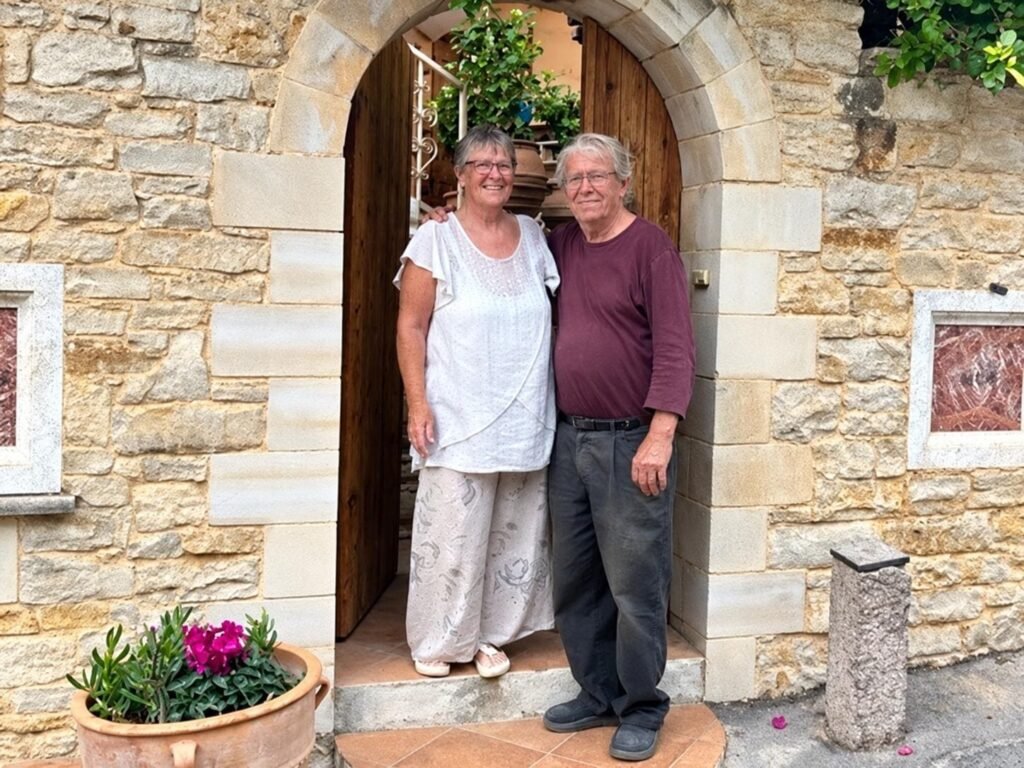
Huset i Fres before its restoration, c. // Kirsten and Jørgen in front of Huset i Fres, the home they restored together
A House That Grew Over Time
Around thirty years ago, Kirsten and Jørgen began restoring what would become Huset i Fres. The building was in ruins, but through their own hands and years of work, they gradually transformed it into the home we see today.
Looking at photographs of the house before its restoration, it is remarkable to see how much has changed. The building itself tells a story of patience, practical knowledge and the possibilities Kirsten and Jørgen saw in what was already there.
And the transformation did not stop with the building. Jørgen has a remarkable eye for the possibilities hidden in things others have stopped seeing value in. He told me about learning that metal windows were being removed from a church and replaced with wooden ones. He spoke with the priest and was allowed to take them.
He told another story about an old building connected with a monastery. He came across some old doors that had been left unused, recognised their potential and asked whether he could take them. With permission, he brought them to Fres, where they became part of Kirsten and Jørgen’s home.
There had not been a plan to create a “living museum.” The house grew together with the things they encountered and were able to use. Some objects had simply reached a point at which somebody else considered them unnecessary. Jørgen happened to see another possibility.
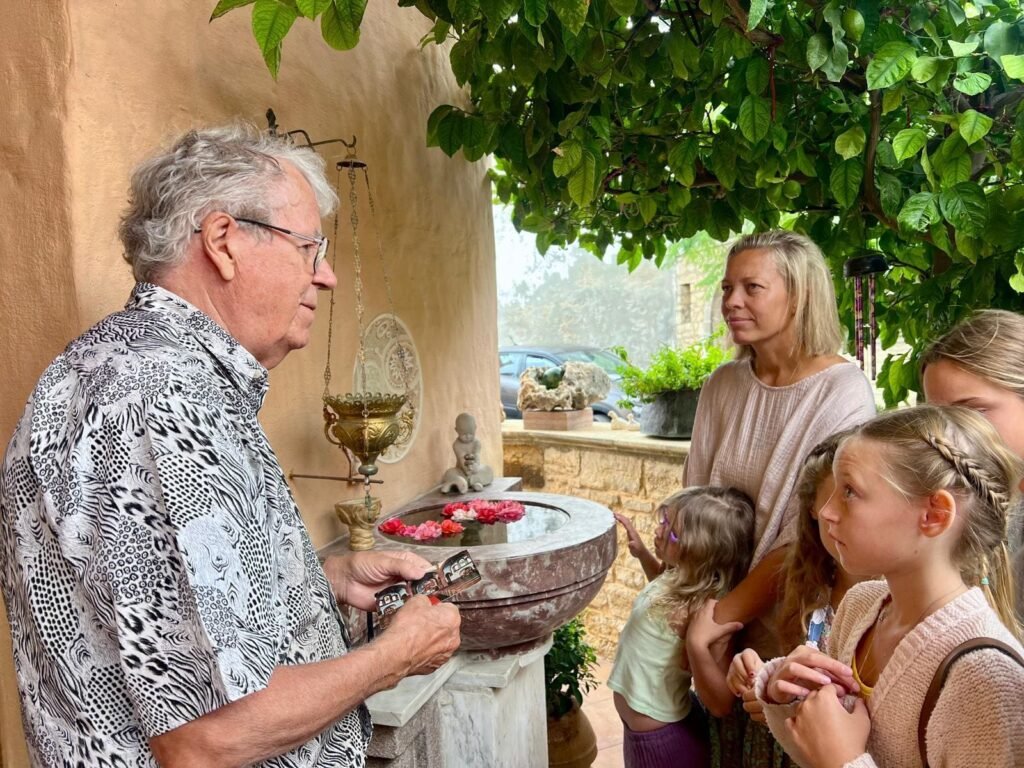
The Church From Jørgen’s Childhood
Among the stories in the house, one mattered especially to me because it spoke of a kind of respect for the past that I find increasingly precious: a willingness to recognise meaning in what might otherwise be lost.
Jørgen grew up as one of seven children in a Catholic family in Denmark. The church held a special place in his family’s life, a connection that continued into the next generation.
When the church was changed, elements of the old interior were removed. Jørgen described stonework from the altar and baptismal area that dated from the early twentieth century and had originally been made in Italy. Some of that stone was saved and eventually became part of their home in Crete.
When I asked whether this connected directly with his own story, Jørgen answered simply, “Yes, yes, all my family.” Kirsten added, “He was in that church every Sunday with his family, seeing all this in the altar and the baptising bowl throughout his childhood, and his children are baptised.”
For me, this was what made the story so powerful. It was not simply an old piece of stone. It belonged to a place connected with Jørgen’s childhood and with important moments in his family’s life.
Saving Things Takes Work
There is something beautiful about giving old things another life, but behind that beauty lies a great deal of work. Jørgen told me about stone, marble, old tools and other things he had encountered over the years. At one point he described seeing materials being removed from a business in Denmark and offering to clear them himself. He collected what could still be useful. It is not simply about recognising something worth keeping. Somebody has to carry it, transport it, repair it, adapt it and find a use for it. “Yes, but I love to work.” Jørgen added, “It’s a fantastic gift to love to work. Always have something in my mind to do. That’s nice.”
Do Objects Carry Memory?
The conversation that followed moved through some of Jørgen and Kirsten’s personal experiences and beliefs, but what stayed with me was how naturally a question about objects became a conversation about people.
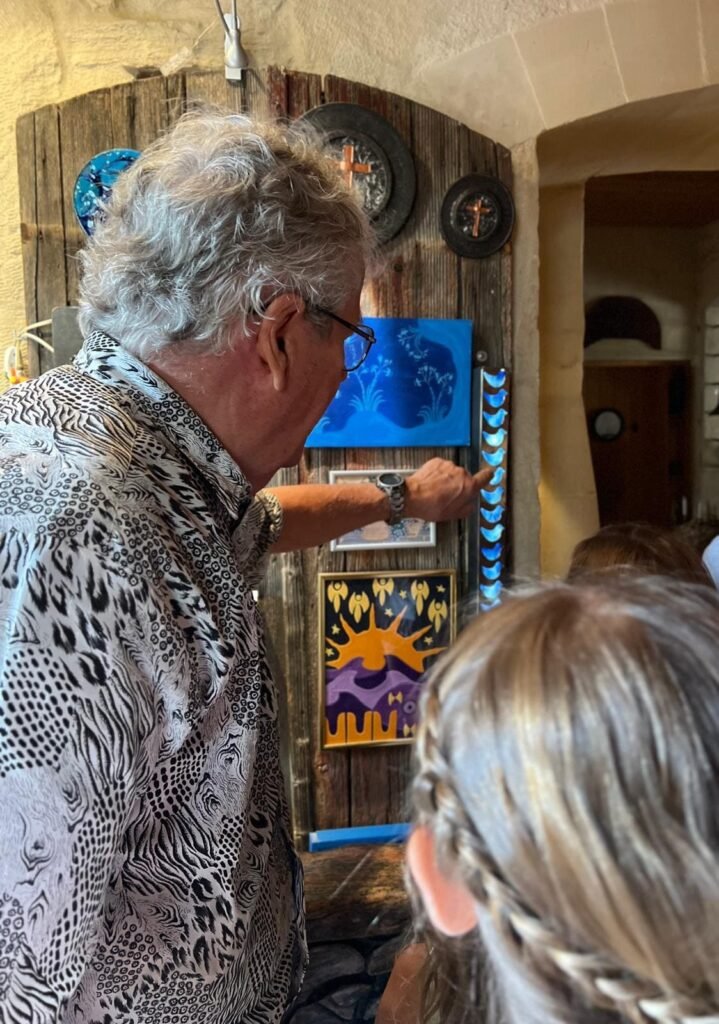
Again and again, something in their house led to a person, a place or an experience connected with it.
Perhaps the question itself can remain open. When we say that an object carries memory, is something held within the object, or does the object give our own memory somewhere to return?
After talking for some time about old objects, I asked Kirsten what she thought we lose when we are encouraged to buy something new instead of repairing what we already have. “Of course we need something new. Of course it’s practical to have a functional fridge,” she said, speaking about useful things in the kitchen and modern technology that can help us in everyday life. Then she added, “But it’s good also to keep something historical. I like to do that.” From there, she began talking about her mother.
Her Mother’s Furniture
Kirsten’s mother died at the age of ninety-four. Afterwards, Kirsten, Jørgen and Kirsten’s daughter went through her apartment together. They chose the belongings they wanted to keep, even though bringing some of them to Greece would cost money. Other useful things were given to people who could benefit from them or passed to a second-hand shop.
They did not keep everything. Kirsten remembers the experience positively because, while going through the apartment, they remembered her mother together.
She also made an important distinction. Keeping things from someone who has died is not automatically positive. “If you don’t want to have anything to do with your relatives, of course you get rid of all that stuff because it will remind you of something that you don’t want to remember.”
For Kirsten, the situation with her mother was different. “If you have good memories, if you have something that connects you to this kind of furniture or different kind of things, you will take them and take care of them and let them pass to the next generations.” And then she explained it very simply: “Because I had a good relationship, I’m happy to see the furniture and be a part of my life.” A mother’s furniture is kept because the memories attached to it were worth carrying forward. The value, in Kirsten’s example, is not simply in keeping something because it is old. It is also in the relationship attached to it.
Using What We Have
This brought me back to something Kirsten had said earlier: “Use what you already have. Don’t have a focus on what you don’t have. Use what you have.” Her comments about modern things made this thought more nuanced. It was not a rule that everything old should be kept or that nothing new should be bought.
The things in Huset i Fres had not all been kept for the same reason. Some were useful. Sometimes Jørgen saw potential in something that had been discarded. Some carried family memories. Others had a history that interested them. Their house contains all of these reasons at once.
Learning and Passing It On
Earlier in our conversation, Kirsten had moved from taking care of things to another kind of care: sharing what we know. “If you know something, you give your knowledge away, so that it’s not kept in you.” She spoke about teaching in a way that gives knowledge to students because you want them to learn and develop, even, eventually, to become better than their teacher.
Jørgen’s experience of learning practical skills was different. He remembered that when he was young, the first money he had was spent on tools. His father, he said, had little more than a shoebox containing the family tools and generally called other people to do practical jobs. So I asked Jørgen where his own ability came from. He said, “If I see people do something, I can do it also.” He remembered situations in which something needed repairing, and he did not have the money to call a company. “I could forget it or do it myself. And after this you learn it.”
He also spoke about young people coming to Huset i Fres with bicycles and using the space to work on them. From there, our conversation returned to the children.
What Can a Child Take From a Few Hours?
I asked Kirsten what she would hope our children carried away from the workshop, not the clay objects themselves, but perhaps one thought or feeling. She hesitated. “That’s a big question. They were there only for some hours.” I appreciated that answer. It did not ask a few hours together to become more than they were. Kirsten spoke instead about children being together, finding a material and trying to create something. She mentioned other small workshops they might experience, knitting, weaving and other practical activities. “These small seminars of different activities of different kinds of things can teach them that we can produce things ourselves for what we want to have and do.”
Perhaps what they took from that morning is not something we can know yet. They spent a few hours in this unusual house, listened to some of its stories and made something of their own with their hands.
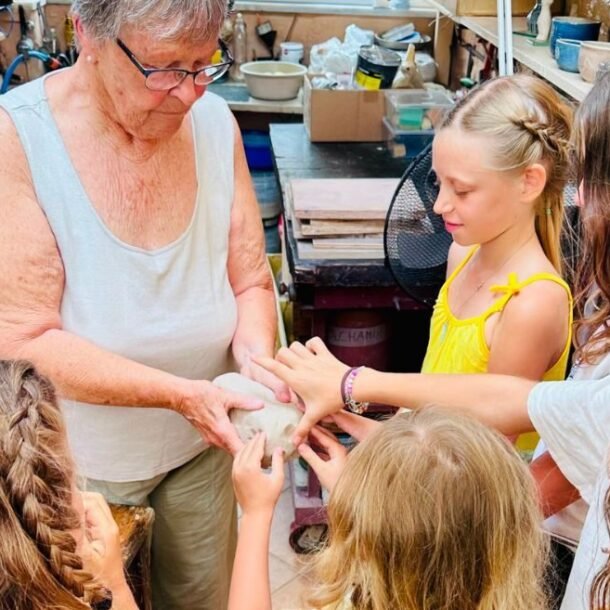
And the small clay objects they left behind brought us back to where our conversation had started. Fired clay can remain long after the people who made it are gone. Someone in the future might find what we made that day and wonder, just as we wonder about objects from the past: Who made this? What was it for? What did it mean? We don’t know what they would decide. For now, we know only the story of that summer morning: six children around a table in Fres, with pieces of earth in their hands, surrounded by the stories of those who came before them, some of which they might one day carry into stories of their own.
About the Author:

Ania is a passionate community builder bringing women together across cultures and generations. She spent four transformative years in Crete – living close to nature. The island became for her a source of life-changing energy and a new path. Ania is committed to creating workshops and circles – spaces for real connection. She co-founded Women of Crete – Oi Gynaikes Tis Kritis in 2022, a vibrant community of international and Greek women. Returning to Poland in the late summer of 2025, Ania wishes to continue weaving bridges between women as she started in Crete.